
CTedu’s 4Rs: Report, Results, Review and Smart Retake
Completing a Trial Test is only the beginning. The real improvement happens when students understand what went wrong, rebuild their thinking and later confirm that the learning has lasted.
CTedu organises this process into four steps: Report, Results, Review and Retake. Used together, these 4Rs turn each Trial Test into a complete learning cycle rather than a one-off score.
The 4Rs Workflow at a Glance
- Complete a Trial Test under proper test conditions.
- Read the Report to identify the main concerns.
- Open Results to examine timing and individual questions.
- Complete Review carefully and diagnose each mistake.
- Use Smart Retake later to check genuine mastery.
1. Report: Know Where to Look
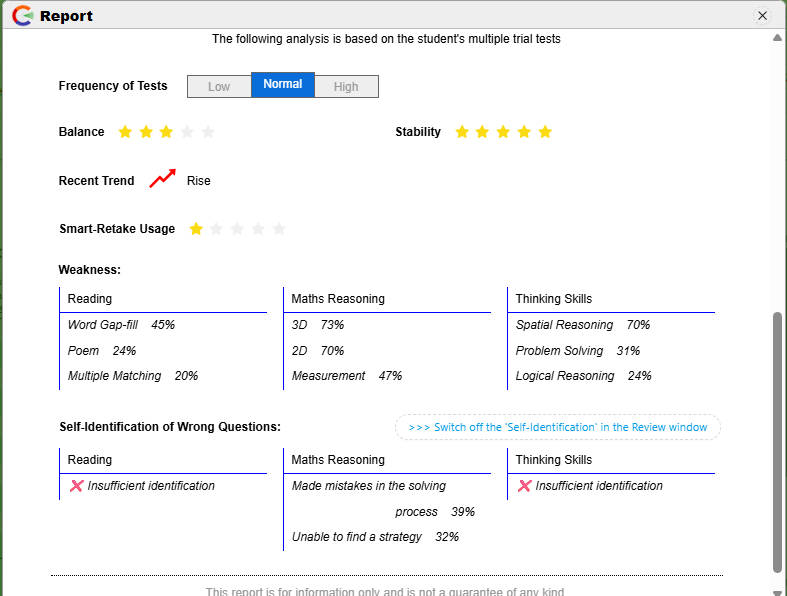
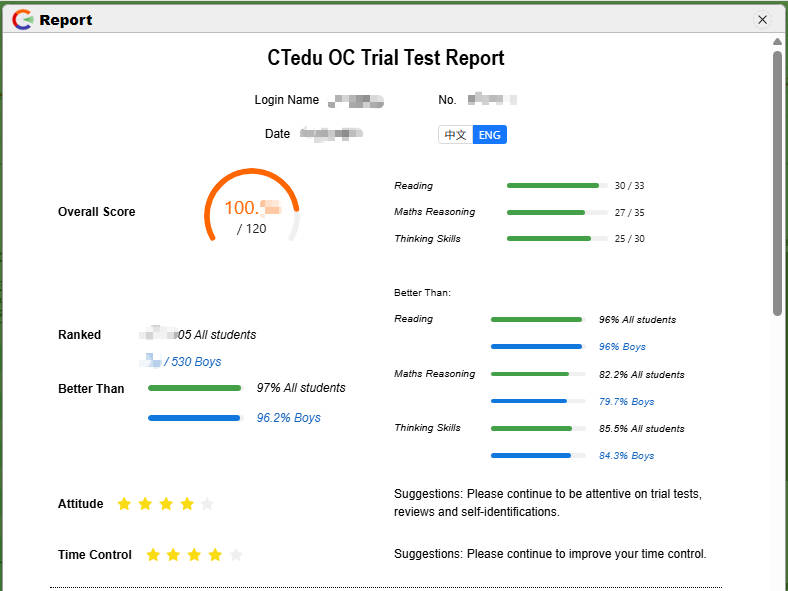
The Report is the starting point for investigation, not a judgement of the child.
CTedu analyses areas such as learning attitude, score consistency and Smart Retake usage, then provides star ratings and practical suggestions. If an area falls below three stars, parents should look more closely at the Results or observe the child during a future test to identify the cause.
The Report also highlights the three weakest knowledge areas in each subject. Its mistake-diagnosis summary shows which error types appear most often during Review. Together, these features help families decide where attention is actually needed instead of relying only on the total score.
2. Results: Understand What Happened
The Results page shows more than correct and incorrect answers. It also reveals how the child used time across the test.
Parents should look for patterns rather than judging one question in isolation. Spending too long on several difficult questions, while rushing easier questions, may indicate weak time management. Finishing unusually early may suggest that the child did not check carefully. A very uneven pattern may also show that the child became stuck or lost concentration.
The purpose is not to criticise every slow answer. It is to understand how the test unfolded and whether the child needs to improve pacing, question selection or concentration.
3. Review: Rebuild the Thinking Process
Review is the most important part of the cycle.
The aim is not simply to answer the same question correctly on a second attempt. Students should try to remember what they were thinking when they chose the wrong answer and identify the real cause of the mistake.
Three questions are especially useful:
- What was this question testing?
- What was I thinking when I chose the wrong answer?
- What should I do differently when I meet a similar question?
For Reading, students should return to the passage and identify the evidence that supports the correct answer. Many Reading questions require students to locate and interpret information from the text, so finding the evidence independently is part of the learning process. CTedu provides explanations where extra guidance is genuinely needed, but students should avoid becoming dependent on explanations for every question.
For Mathematical Reasoning and Thinking Skills, CTedu allows students to classify mistakes into causes such as misreading the question, having no clear approach, making an error during the working process, running out of time or another reason. These categories help distinguish a knowledge problem from a process problem.
Parents can help by asking the child to explain the reasoning aloud. They should avoid immediately giving the answer. A small prompt is often enough for the child to continue independently.
For students preparing for the OC Placement Test, this parent-guided discussion is especially valuable because younger children are still building independent study habits.
For students preparing for the Selective School Entry Test, the long-term goal should be greater independence. Students should gradually learn to analyse mistakes and decide what to improve without waiting for an adult to direct every step.
4. Retake: Confirm Genuine Mastery
A correct answer during Review does not always prove that the child has mastered the skill. The original question may still be fresh in memory.
CTedu Smart Retake checks understanding by presenting changed questions based on earlier mistakes rather than simply repeating the original items. This prevents remembered answers from being mistaken for genuine mastery.
CTedu automatically provides the Smart Retake suggestion after one week from the original Trial Test, once there are enough questions available in the relevant subject. A score above 15 out of 20 in the Smart Retake quiz is a strong indication that the earlier Review was effective. Consistent improvement in later Trial Tests provides even stronger evidence.
If the Smart Retake result remains weak, the child should return to the Review process and examine whether the original mistake was truly understood.
A Simple Routine for Families
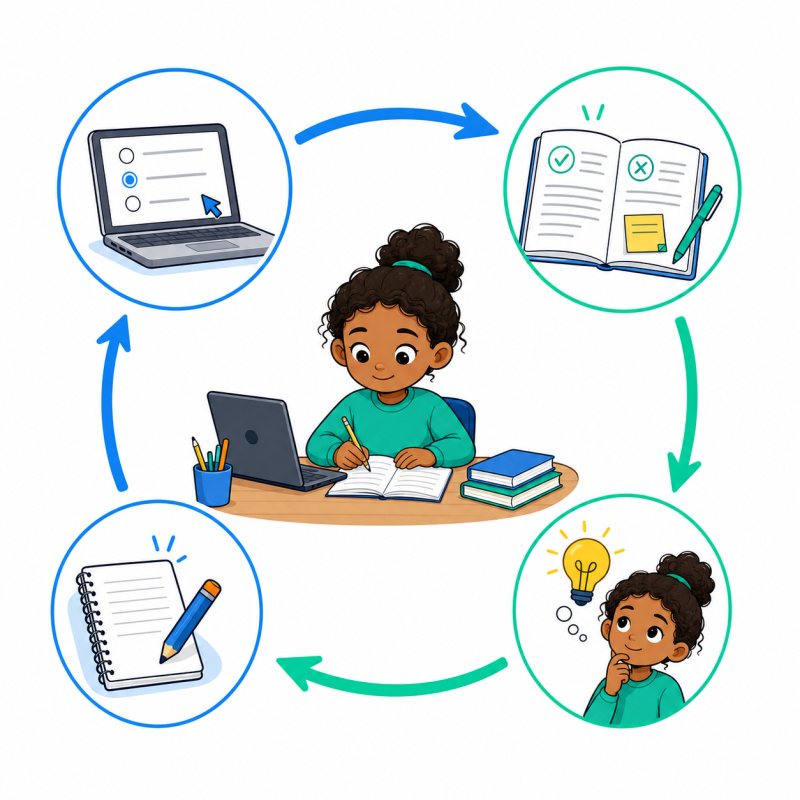
After each Trial Test, families can follow this routine:
- On the same day or the next day, read the Report and Results.
- Complete Review while the child can still remember the original thought process.
- Discuss the main mistakes, but let the child explain and solve as much as possible.
- Complete Smart Retake at least one week later.
- Use the Retake result and the next Trial Test to judge whether the weakness has genuinely improved.
Final Thoughts
A Trial Test should not end when the score appears. The score shows where the child is; the 4Rs show how to move forward.
Report identifies where to look. Results explain what happened. Review rebuilds the thinking process. Retake confirms whether the learning has lasted.
Used consistently, this cycle helps students become more accurate, more independent and better prepared for both the Opportunity Class Placement Test and the Selective School Entry Test.